

PROFESSOR CHRIS BAKAL
THE INSTITUTE OF CANCER RESEARCH

Professor Chris Bakal
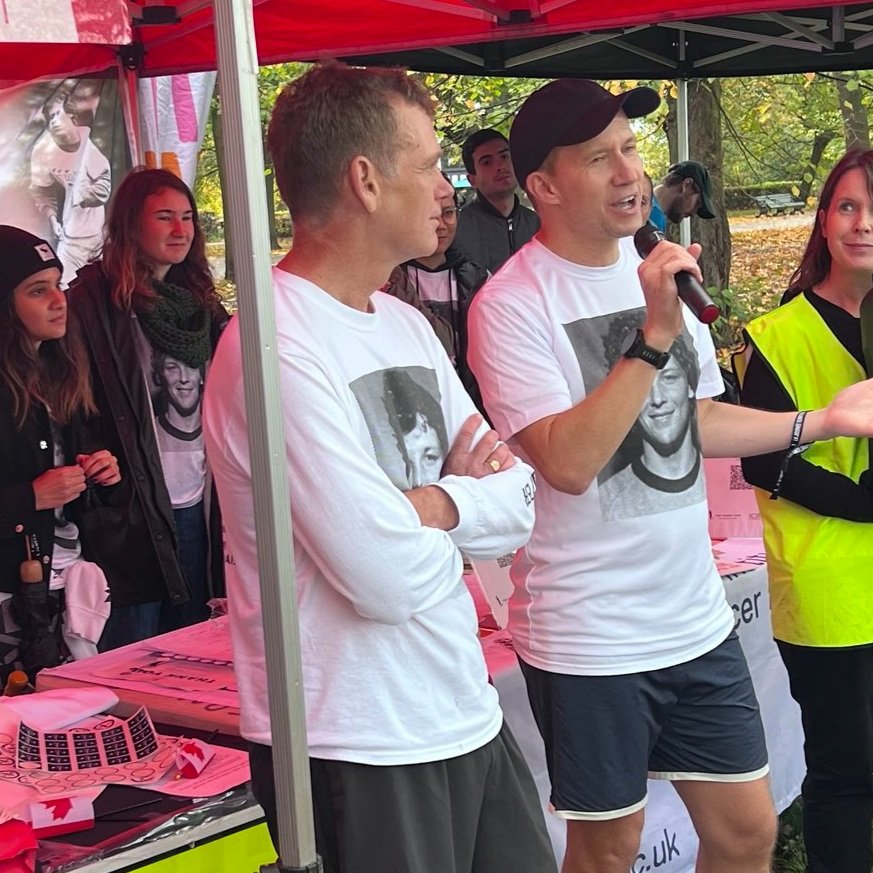
Chris and Darrell Fox
Canadian Professor Chris Bakal aims to understand how cells change shape, become cancerous and form metastases. Professor Bakal has received numerous awards for his research.
Professor Bakal received his undergraduate degree in Biochemistry at the University of British Columbia and his PhD in Medical Biophysics at the University of Toronto and the Ontario Cancer Institute.
He joined Harvard Medical School and the Howard Hughes Medical Institute as a postdoctoral fellow in 2004. In 2006, he also became an affiliate of the Computer Science and Artificial Intelligence Laboratory (CSAIL) at the Massachusetts Institute of Technology, as well as an affiliate of the Broad Institute.
In 2009, Professor Bakal started his own research team at the ICR on a Wellcome Trust Research Career Development Fellowship. His team is part of the integrative network biology initiative, which is a collaborative research effort between scientists of different disciplines to study the biological processes involved in cancer metastasis. In 2016, he was awarded the title of Reader at the ICR.
Outside work, Professor Bakal was a former world-ranked downhill ski racer who specialised in the super-giant slalom event. He is also a former track and field athlete who finished in the top eight three times at the Canadian National Championships 1500m event and has also run a mile in 4 minutes and 3 seconds.
A conversation with Neil Johnson, Chair of Terry Fox Run UK, and ICR’s Professor Chris Bakal, recipient of the Terry Fox Run UK’s donations
November 30, 2025

Neil Johnson:
Professor Bakal, can you start by explaining the central focus of your lab’s work at the Institute of Cancer Research? What big question drives your research?
Professor Chris Bakal:
Our lab at the Institute of Cancer Research (ICR) is a team of 14 researchers all focused on one major goal: how to stop cancer cells from spreading throughout the body. For over 30 years, I’ve been obsessed with understanding how cancer cells change their shape in order to spread. This really matters, because 90% of cancer deaths occur when cancer spreads, so blocking the shape-change process is one of the most powerful routes we have to saving lives.
Neil Johnson:
How exactly are you studying cancer cells today, and what role does AI play?
Professor Chris Bakal:
Right now, we’re using some of the world’s most advanced microscopes to capture 3D and 4D movies of cancer cells. These give us incredible insight into how cells move, adapt, and change shape. We then use these images to train artificial intelligence, giving us proprietary AI models to understand how cancer cells behave. With AI, we can uncover innovative ways to stop these shape changes from happening in the first place.
Neil Johnson:
Since receiving support from the Terry Fox Run UK, what breakthroughs has your lab been able to achieve?
Professor Chris Bakal:
Terry Fox Run UK’s support has enabled several major breakthroughs. We have:
Identified proteins that control cancer cell shape changes, revealing new targets to stop metastasis — published in Cell Reports last year.
Developed AI that predicts cancer type and even patient survival directly from microscope slides — published in top AI conferences worldwide.
Built an AI pipeline using 3D imaging to predict drug response — published in Cell Systems this year.
Created AI that predicts how cells will change even before experiments begin — currently on track for publication in Nature Communications.
Terry Fox Run UK’s support has been absolutely transformative—none of these breakthroughs would have happened without it.
Importantly, this support has also funded the training of several outstanding PhD students — Melina Beykou, Julia Perea-Paizal, Ian Jones, Matt De Vries, and Olga Fourkioti — who all successfully graduated and continue their contributions to science. Their achievements are a powerful part of Terry Fox’s legacy in the UK.
Neil Johnson:
And finally, with continued donations from the Terry Fox Run UK, what do you think your team can achieve in the next few years?
Professor Chris Bakal:
We are developing a brand-new AI technology to predict how cancer cells will respond to drugs without doing an actual experiment. In the next few years we imagine using this so the drug development process can be reduced by half the time. We also believe we can personalize cancer treatment - imagine being able to predict how each patient’s cancer cells will respond to therapy before starting treatment.
We are working towards a future where we can detect dangerous cancers earlier, design treatments that trigger cancer cells to self-destruct, and where fewer drugs fail late in clinical trials. Our research will give scientists around the world a far deeper understanding of how cancer spreads—and critically, how to stop it.